

Human engineering for operations that cannot stop.
Technology, science and data for operational decisions that account for the human factor.
GILBRETH X helps organisations with shift-based work understand how schedules affect fatigue exposure, recovery opportunities and operational safety conditions. We combine human factors engineering, sleep science and data analysis to assess shift schedules, compare alternative ways of organising work and support decisions grounded in the actual demands of each operation.
A schedule may ensure adequate staffing. But what does it tell us about people?
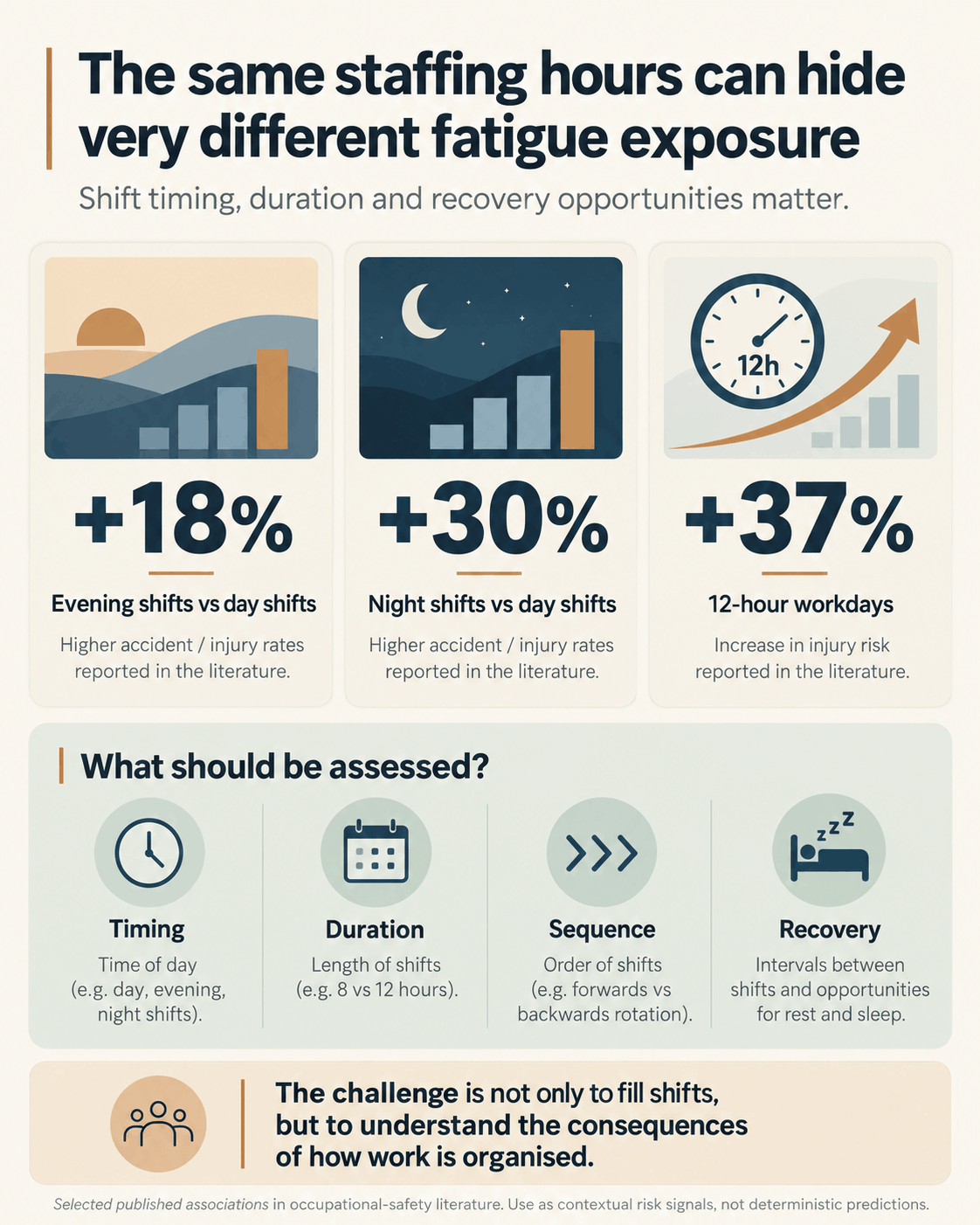
Two schedules with the same total working hours can offer very different opportunities for recovery. Night work, shift sequences, intervals between work periods and schedule changes matter just as much as the total number of hours.
Meeting staffing requirements and legal limits is essential. On its own, however, this does not reveal all the organisational conditions associated with fatigue exposure.
The challenge is not simply to arrange shifts. It is to understand the consequences of how work is organised.
From legal compliance to effective risk management
Aviation has specific frameworks for fatigue management; in European railways, human and organisational factors form part of safety management systems; and in maritime transport, international guidance on fatigue is available. Requirements differ between sectors, but each illustrates the value of a structured approach to human factors.
GILBRETH X applies scientific knowledge and human engineering criteria to shift-schedule analysis and operational decisions, while respecting the obligations specific to each activity. We do not automatically transfer rules from one sector to another.
From information to decisions: three solutions
Shift schedule assessment and fatigue exposure analysis
We analyse planned and actual working schedules to identify night-work patterns, demanding shift sequences and structural opportunities for recovery.
Deliverables: verifiable indicators, priorities and technical recommendations.

Shift schedule redesign and optimisation
We develop and compare alternatives using explicit staffing requirements, skills and operational constraints.
Deliverables: comparative scenarios and a substantiated proposal, subject to approval by the organisation.

Fatigue risk management and mitigation
We support preventive measures, procedures, training and monitoring indicators tailored to the operation.
Deliverable: a context-specific fatigue mitigation and management plan.

Technology for decisions people can understand
The GILBRETH X methodology organises scheduling data, calculates structural exposure indicators, assesses shift patterns and supports scenario comparisons. It has already been applied in a real operational setting through specialised services and analytical tools. The gradual integration of these capabilities into a proprietary digital platform forms part of our technology development roadmap.
Verifiable data
Transparent criteria

Human decisions

What does your organisation gain?
- Greater visibility into patterns that timesheet reports do not reveal.
- Clear criteria for comparing schedules, explaining changes and documenting decisions.
- Alternatives tailored to staffing requirements, skills and available resources
- A structured basis for building prevention into operational decisions.
Where we work
Human capability.
Engineered in.
Human capability should be part of the decisions that shape operations — not considered only after schedules have been finalised.
Does your organisation understand the exposure created by its schedules?
In an introductory meeting, we can discuss your context, available data and opportunities for intervention.