
Better schedules start with better decisions.
Technology-enabled human engineering that balances operational demands and recovery opportunities.
GILBRETH X develops and compares alternative shift arrangements while respecting staffing needs, skills, employment arrangements and real operational constraints. Our methodology combines scientific knowledge, data analysis and technological decision-support tools.
We are not looking for a universally perfect schedule. We are looking for workable, transparent solutions tailored to the operation.
Adequate staffing is essential. How we achieve it matters too.
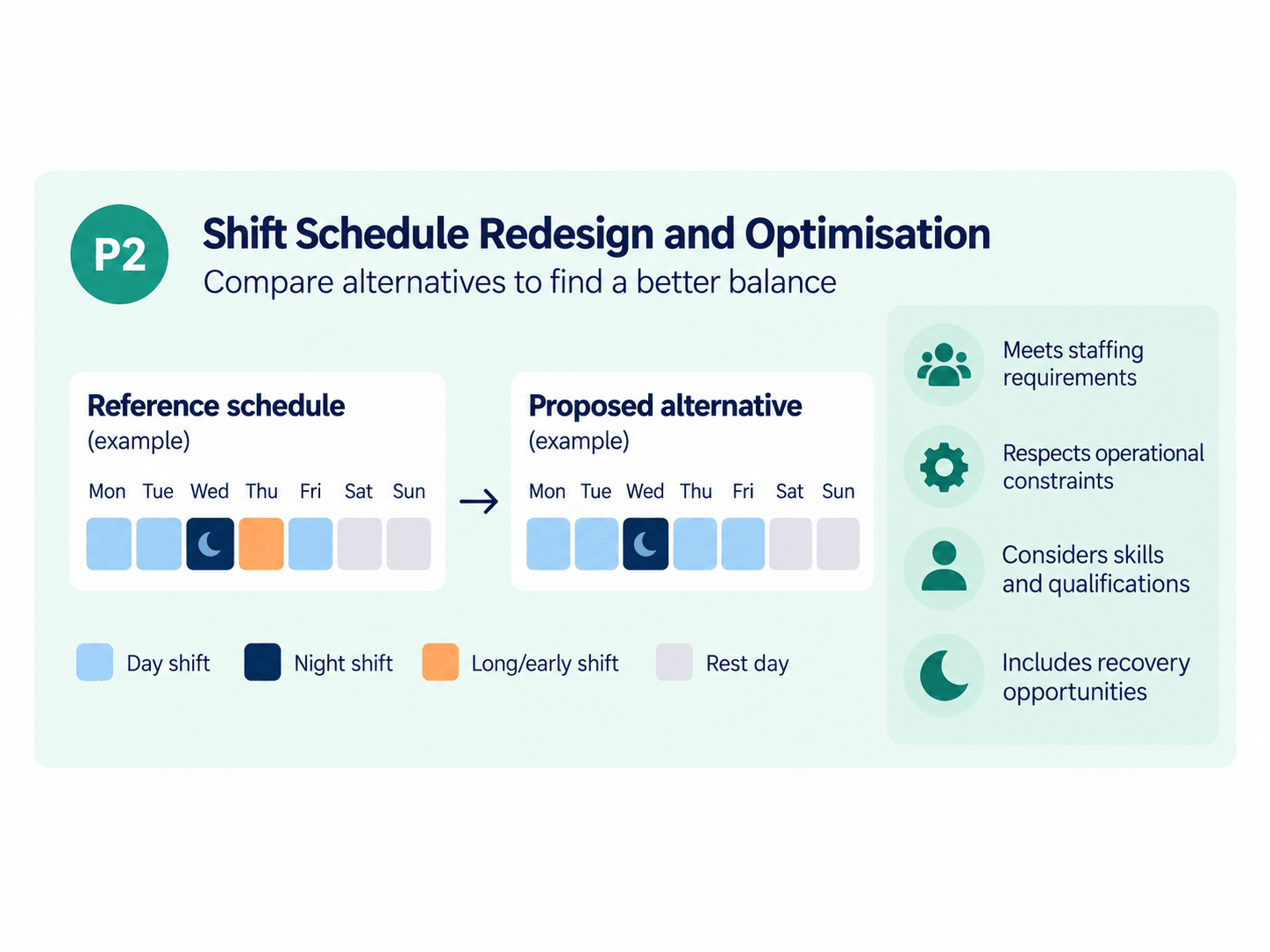
Shift swaps, substitutions, absences and overtime can substantially change an originally planned schedule. Any redesign should take these realities into account and identify whether alternatives can meet the same operational requirements with different exposure patterns.
What shapes the alternatives
- Operational needs: minimum staffing per shift, roles, qualifications and service continuity.
- Applicable rules: contractual arrangements, work and rest limits, leave and unavailability.
- Fatigue exposure: night shifts, shift lengths, sequences, rotations and recovery opportunities.
- Fairness and predictability: distribution of the most demanding shifts and preferences where feasible.
- Feasibility: available resources, replacements and potential effects on additional hours and costs.
From the current roster to evidence-informed alternatives
What you receive
- A characterised baseline of the current roster.
- Alternative shift arrangements.
- A transparent comparison of operational and exposure-related criteria.
- Identification of trade-offs and conditions for implementation.
- A technical recommendation for discussion with the organisation.
- Implementation support and evaluation indicators, where contracted.
More than a new allocation of shifts, we provide analysed alternatives and the information needed to make a choice.
Technology-enabled human engineering
Redesign is delivered as a specialised service using a methodology already applied in a real operational context, alongside data analysis and comparison tools. Gradual integration of these capabilities into a digital platform is planned, subject to development and testing.
Our engineering service is available now, with specialist analysis and human review of proposals.
Frequently asked questions
Not necessarily. A reliable baseline is useful and can be established during the initial phase of the project itself.
This can be an objective, but it depends on actual staff availability, skills and other constraints.
This is not required. We can work with existing data and provide proposals for the organisation to assess and implement.
Yes, where included in the project, while respecting operational and privacy requirements.
Value for organisations and people
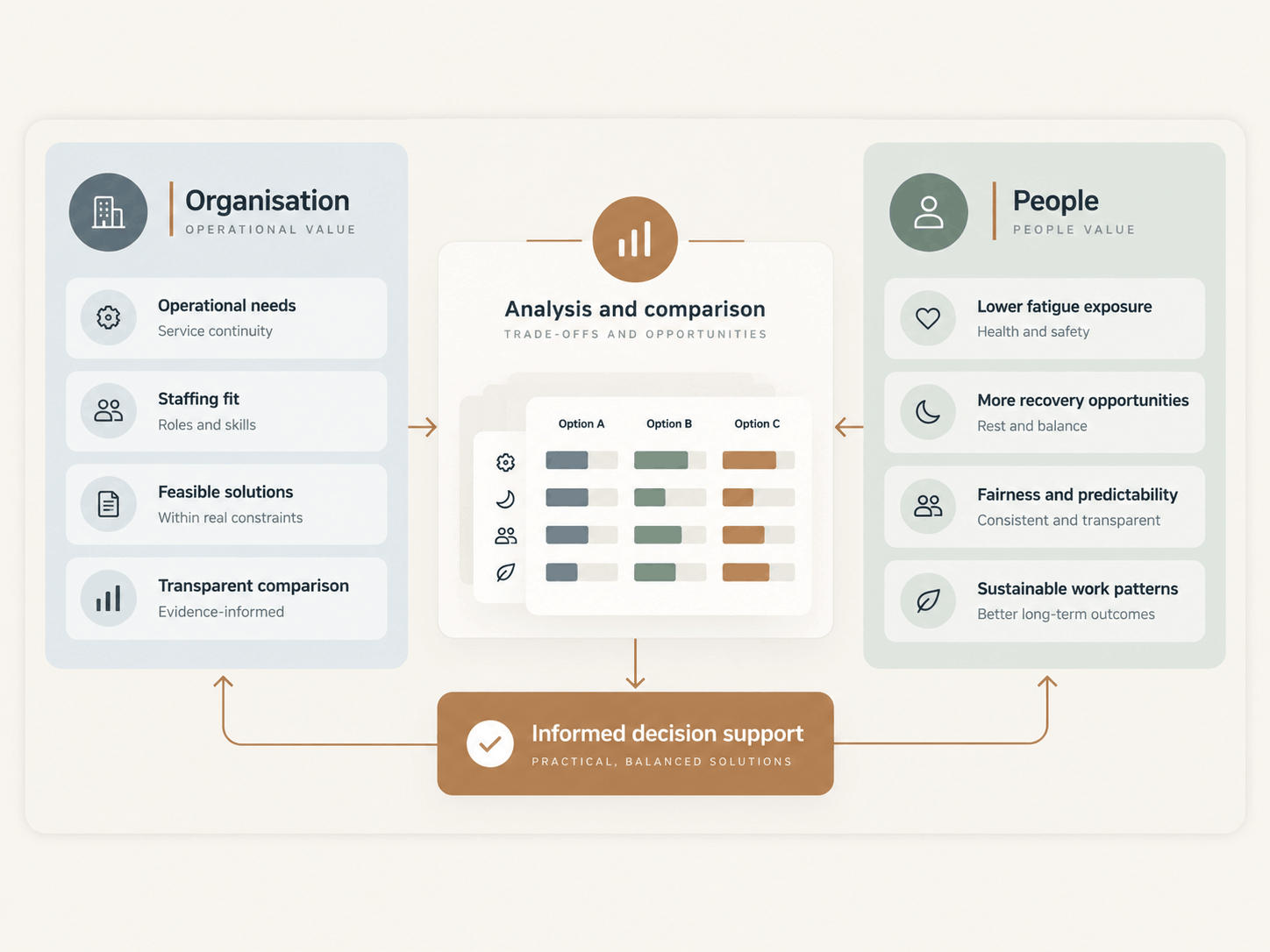
Comparative analysis can strengthen the basis for decisions, identify opportunities to redistribute resources and give greater consideration to recovery. Actual outcomes depend on the feasibility and implementation of the chosen alternative; we do not promise automatic savings or reductions in incidents.
Your organisation may have more options than you think
Let us understand your operational constraints and assess the possibilities for reorganisation.