
Operational safety is also built into schedules.
Human factors engineering for transport operations that demand continuity and safe decisions.
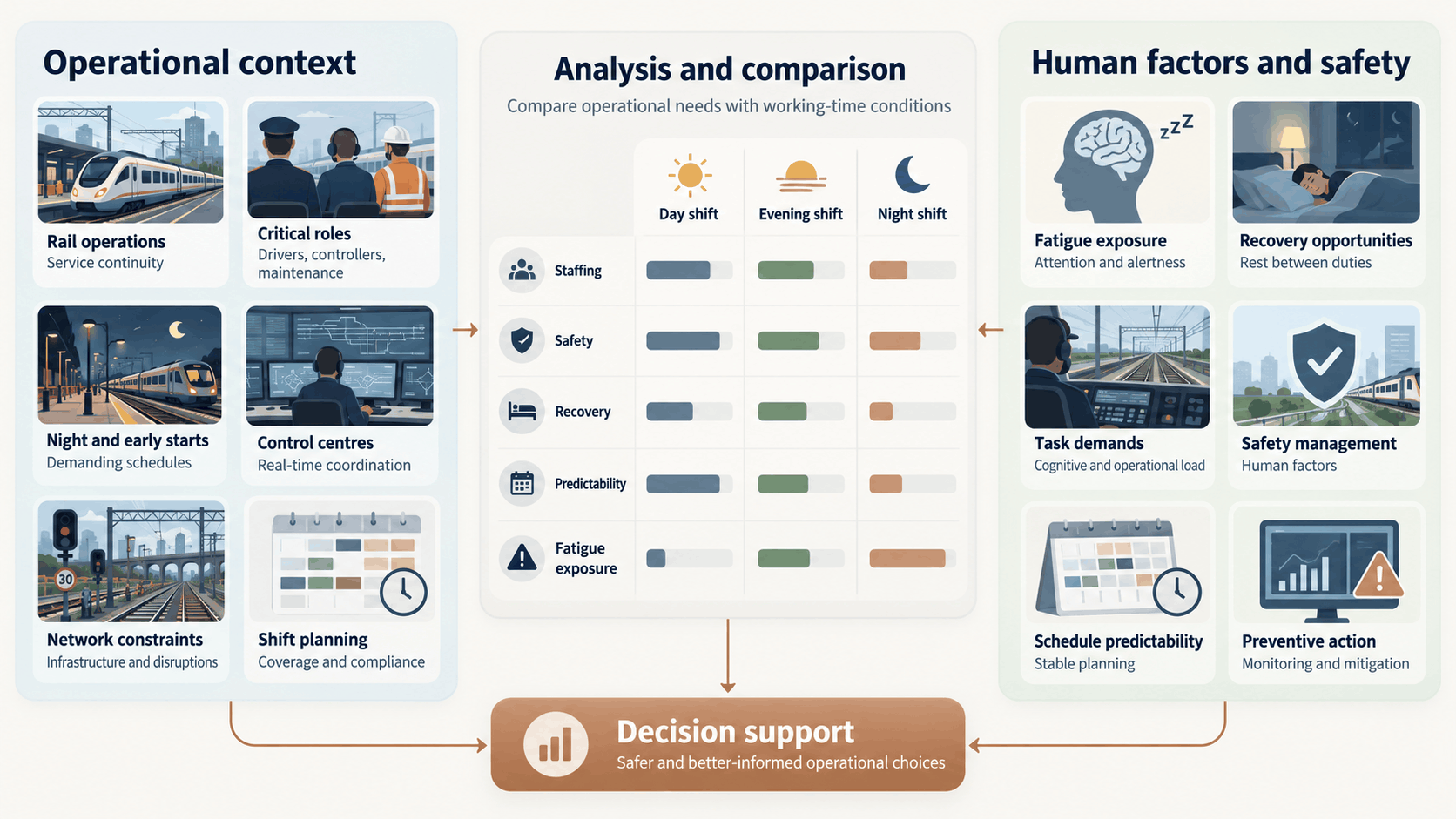
In rail and other transport sectors, the organisation of working hours affects recovery opportunities for professionals carrying out continuous operations and safety-critical duties. GILBRETH X supports the characterisation of working patterns, comparison of alternatives and definition of relevant fatigue management measures.
The challenge of demanding schedules
Night work, very early starts, rotations, unexpected changes and extended duties can alter organisational exposure conditions. Operational and safety requirements specific to the sector must be considered from the outset.
Rail: human factors in safety management systems
Commission Delegated Regulation (EU) 2018/762, section 4.6, sets out requirements for integrating human and organisational factors into the safety management systems of the railway undertakings and infrastructure managers within its scope.
Technical assessment of shift schedules can provide information about some relevant working conditions. It is not equivalent to certification, a regulatory audit or automatic demonstration of compliance.
Other transport and logistics
Road transport activities covered by specific European rules have their own driving-time and rest requirements; logistics and control operations also differ. GILBRETH X adapts its analysis to the role and the operator’s regulatory context, without automatically applying railway or aviation standards.
Potential applications
- Characterise night work, shift sequences, rest and deviations from planned schedules.
- Compare schedules against service needs, skills and specific requirements.
- Support documentation of decision criteria and intervention priorities.
- Define fatigue management measures and indicators proportionate to the operation.
A sector-specific application that begins with assessment
The methodology has been used in care settings and requires adaptation and assessment in transport contexts. Where appropriate, we propose starting with a focused operation, clearly defined objectives and explicit criteria.