
Turn fatigue risk into informed preventive action.
Fatigue is more than a workforce wellbeing issue. It can compromise attention, performance, operational reliability and safety, creating risks that organisations cannot afford to overlook.
GILBRETH X helps organisations move beyond awareness to action, identifying fatigue-related risks and developing practical prevention strategies adapted to their operational realities.
Combining scientific evidence, human systems engineering and operational analysis, we support informed decisions that help organisations protect their people, strengthen operational resilience and promote more sustainable working conditions.
Because effective fatigue management starts with understanding how work is organised.
International principles, practical organisational solutions
Fatigue risk management is an established concern in safety-sensitive industries, including aviation and rail transport, where systematic approaches have been developed to identify, assess and manage fatigue-related risks.
These principles can inform prevention strategies in other sectors, provided they are adapted to the specific working environment, regulatory requirements and organisational responsibilities.
GILBRETH X combines relevant scientific knowledge and international guidance with its human systems engineering approach to develop proportionate and operationally realistic fatigue management recommendations.
Our methodology supports risk assessment, preventive planning and organisational decision-making. It does not constitute certification or formal approval of a Fatigue Risk Management System (FRMS).
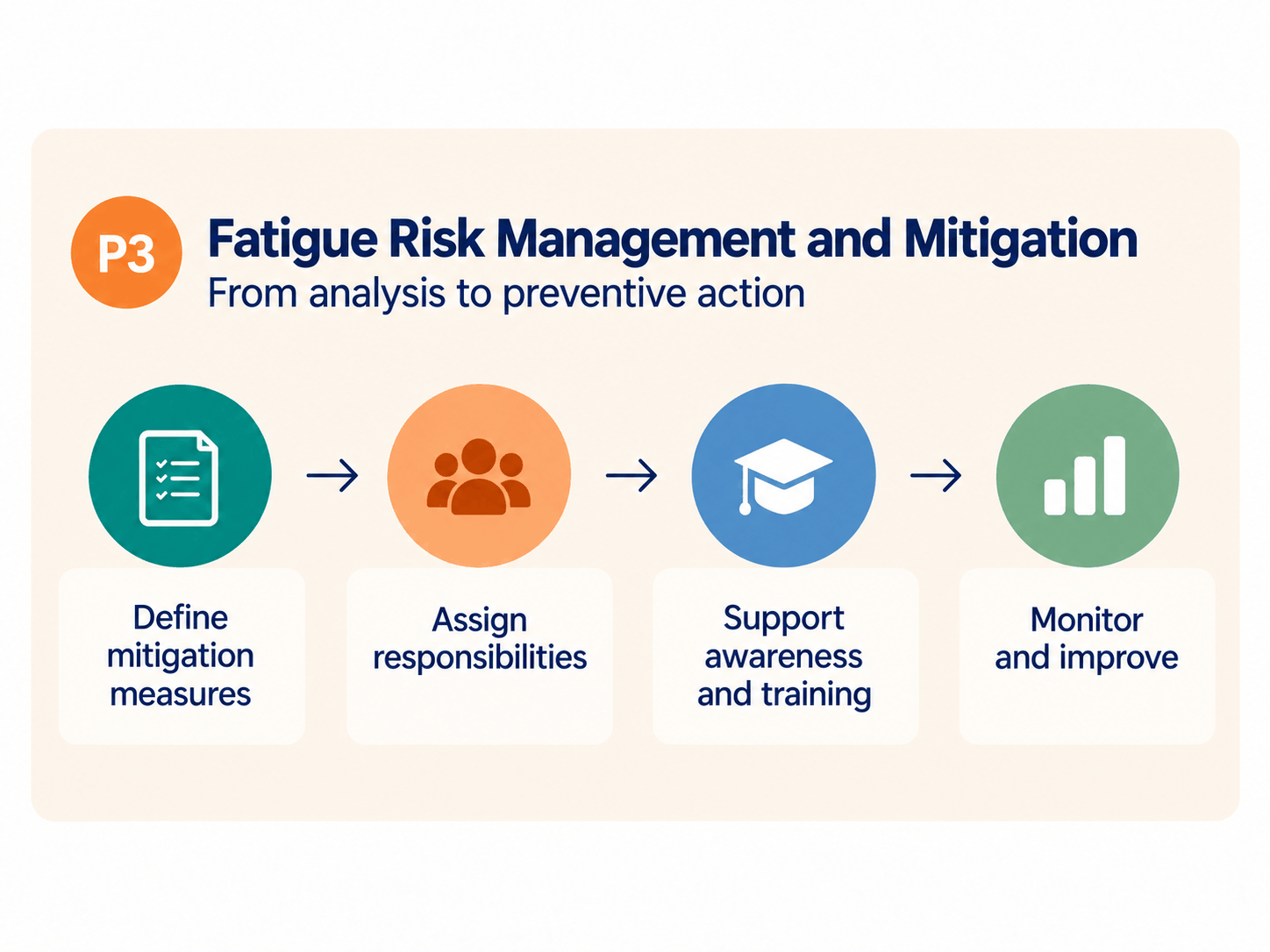
From risk identification to preventive action
Recognising fatigue as a risk is only the beginning. The real challenge is understanding where exposure occurs, which factors can be addressed and how prevention can become part of everyday operations.
GILBRETH X supports organisations in developing practical fatigue management strategies through four complementary areas of intervention.
-
Work organisation
Assess opportunities to reduce fatigue-related exposure through working-time arrangements, breaks, task distribution and recovery opportunities, while respecting operational requirements.
-
Operational mitigation
Identify practical measures to manage fatigue-related risks in demanding situations, extended duties and other operational conditions where fatigue may affect performance or safety.
-
Awareness and responsibilities
Support managers and teams in understanding fatigue-related risks, recognising warning signs and establishing clear responsibilities for prevention.
-
Monitoring and continuous improvement
Recommend appropriate indicators and review processes to help organisations assess implementation, identify emerging concerns and progressively improve their prevention strategies.
Each intervention is tailored to the organisation’s activities, priorities and operational constraints.
What the organisation receives
GILBRETH X translates fatigue risk analysis into practical recommendations that organisations can evaluate and implement. Depending on the agreed scope, our services may include:
Fatigue risk overview
A structured assessment of fatigue-related challenges, relevant working conditions and existing organisational practices.
Prioritised prevention and mitigation plan
A set of proposed measures, with implementation priorities, responsibilities and operational considerations.
Practical management guidance
Recommendations to help integrate fatigue prevention into everyday operational procedures and management practices.
Targeted awareness and training
Sessions adapted to managers and teams, addressing fatigue recognition, recovery, preventive behaviours and organisational responsibilities.
Monitoring and review framework
Recommendations for indicators, evaluation procedures and periodic reviews to support continuous improvement.
The result is a practical basis for organisational decisions, connecting scientific knowledge with operational needs and realistic prevention measures.
Frequently asked questions
Not necessarily. Working-time arrangements are an important consideration, but fatigue risk management can also involve operational procedures, breaks, workload distribution, awareness, recovery opportunities and management practices. Schedule redesign may be recommended when justified by the assessment.
We consider the organisation’s operational context, available information, working conditions and relevant fatigue-related factors. This allows us to propose areas for further assessment or preventive action, proportionate to the agreed scope.
Training and awareness activities can be included when appropriate. Their content is adapted to the organisation’s needs and may address fatigue recognition, recovery strategies, management responsibilities and practical prevention measures.
No. GILBRETH X provides specialist analysis and recommendations to support organisational risk management. Responsibility for compliance with applicable legislation and sector-specific requirements remains with the organisation.
Yes. A phased approach can help organisations establish priorities, introduce feasible measures and review their implementation before expanding the scope of intervention.
An organisational responsibility, supported by team involvement
Effective fatigue prevention depends on more than individual awareness. It requires organisational commitment, clear responsibilities and an understanding of how work is actually performed.
Managers play a central role in assessing risks, establishing priorities and supporting preventive action. Employees contribute valuable knowledge about operational demands and everyday working conditions.
GILBRETH X encourages a collaborative approach that combines management decisions with appropriate team involvement, while respecting professional responsibilities, confidentiality and data protection requirements. Where individual assessments are considered necessary, additional safeguards regarding privacy, consent and professional interpretation must be addressed.
Fatigue prevention becomes more sustainable when it is integrated into organisational processes rather than treated solely as an individual responsibility.

Make fatigue prevention part of your operational strategy.
Understanding fatigue-related risks is the first step. Taking informed, proportionate action is what allows organisations to strengthen their prevention practices. Discover how GILBRETH X can help your organisation identify priorities, develop practical mitigation measures and establish a structured approach to fatigue risk management.